Singapore Bets Big on AI: OpenAI, NVIDIA, Google Join Nation’s
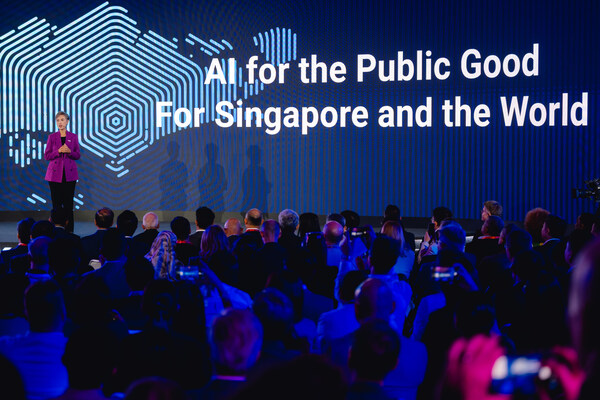
Singapore is entering a new phase of its artificial intelligence (AI) journey. No longer focused solely on AI adoption, the city-state is now positioning itself as a global center for developing, testing, and deploying AI solutions at scale—backed by major partnerships with OpenAI, NVIDIA, Google, and leading robotics companies.
Announced by Minister for Digital Development and Information Josephine Teo during ATxSummit 2026, the latest initiatives signal Singapore’s ambition to become one of the world’s most trusted destinations for AI innovation, commercialization, and governance.
The move comes as governments around the world race to capture the economic benefits of AI, with Singapore seeking to differentiate itself by creating an ecosystem where cutting-edge technologies can move quickly from research labs into real-world applications.
From AI Research to Real-World Deployment
At the center of Singapore’s strategy is a growing emphasis on physical AI and embodied AI—technologies that enable intelligent systems to interact with the physical world through robotics and autonomous machines.
To accelerate development, the Infocomm Media Development Authority (IMDA), JTC, and the Singapore Institute of Technology (SIT) are establishing a large-scale AI testing environment in the Punggol Digital District.
Expected to launch in 2026, the facility will allow companies to test AI-powered robots in real urban environments, creating a living laboratory for next-generation autonomous services.
Industry players including Certis, DHL, Grab, and QuikBot are expected to pilot solutions ranging from autonomous deliveries and smart cleaning services to robotic security patrols.
The initiative reflects a broader trend in AI development, where innovation is increasingly shifting from digital assistants and chatbots toward intelligent systems capable of operating in the physical world.
NVIDIA Expands Singapore’s AI Research Capabilities
In another major boost for the country’s AI ambitions, NVIDIA will establish a new AI research laboratory in Singapore—its second such facility in the Asia-Pacific region.
The lab will focus on technologies that many experts view as the next frontier of AI development, including embodied AI and efficient AI computing.
Researchers will work on enabling machines to better understand and interact with physical environments while reducing the computational costs associated with training and deploying increasingly complex AI models.
By bringing together universities, industry leaders, and government agencies, Singapore hopes to accelerate the translation of advanced AI research into commercial innovation.
OpenAI Deepens Commitment to Singapore
Singapore’s AI ecosystem is also receiving significant backing from OpenAI.
Through a new partnership under the “OpenAI for Singapore” initiative, the company will collaborate with the government to expand AI innovation, develop local talent, and improve access to advanced AI technologies across businesses, public institutions, and communities.
The partnership includes a commitment of more than S$300 million, underscoring growing confidence in Singapore’s role as a strategic AI hub in Asia.
The collaboration is expected to support both economic growth and the responsible deployment of AI across sectors.
Google Partnership Focuses on AI for Society
Alongside OpenAI, Google has entered a national-level partnership with Singapore aimed at using AI to address societal challenges and prepare citizens for an AI-driven future.
The collaboration will focus on workforce readiness, public-sector innovation, and the development of a safe and trusted digital ecosystem.
Rather than treating AI solely as an economic opportunity, Singapore is positioning the technology as a tool for solving real-world problems while strengthening social resilience.
Building the Infrastructure for Trusted AI
As AI adoption accelerates globally, Singapore is investing heavily in the foundations needed to scale AI responsibly.
Temus, a digital transformation company backed by Temasek, will launch an AI Foundry designed to help organizations deploy AI solutions while developing local expertise.
The initiative will initially focus on highly regulated industries such as financial services and healthcare, sectors where trust, compliance, and reliability are critical.
At the same time, researchers at A*STAR’s Institute for Infocomm Research have introduced a new version of the MERaLiON AI model, expanding its capabilities across Southeast Asian languages and making it more suitable for practical, real-world applications.
A Different Approach to AI Governance
While many countries continue debating how to regulate AI, Singapore is pursuing a more pragmatic path.
The government has updated its AI governance framework to address the growing use of AI agents, incorporating lessons and best practices from more than 50 organizations.
In parallel, Google is working with Singapore’s cybersecurity and digital agencies to explore how AI agents can be safely deployed in government services.
The approach reflects Singapore’s broader philosophy: encourage innovation, but build safeguards early enough to maintain public trust.
Singapore’s AI Ambition Goes Beyond Technology
What sets Singapore apart is that its AI strategy is not centered on creating the largest AI models or competing directly with global technology giants.
Instead, the country is focusing on becoming the place where AI technologies are tested, trusted, and deployed at scale.
By combining world-class infrastructure, international partnerships, advanced research, talent development, and practical governance frameworks, Singapore is creating an ecosystem designed to attract companies looking to transform AI breakthroughs into real-world impact.
As competition intensifies among nations seeking leadership in artificial intelligence, Singapore is making a clear statement: the future of AI is not only about building smarter models—it is about turning innovation into solutions that work in the real world.